
For many business owners, floor space is one of the most expensive assets they manage. Every square foot is expected to justify itself through sales, customer engagement, or operational efficiency. Yet one of the most consistently overlooked revenue tools sitting inside thousands of businesses is the ATM, which offers significant savings and benefits compared to other revenue-generating options.
When deployed correctly, an ATM is not an expense or a convenience feature—it’s a self-funding asset. ATMs can deliver high returns and generate steady profits, making them a compelling investment for companies seeking to maximize their financial performance. Using transaction data and market insights from Cash Depot, let’s break down how surcharge revenue and increased dwell time spending turn an ATM into a measurable profit center.
This is the foundation of a smart ATM investment strategy.
Introduction to ATM Investing
ATM investing offers a unique opportunity for both individuals and businesses to generate passive income by leveraging the constant demand for cash in commercial settings. By strategically placing ATMs in high-traffic locations such as convenience stores, gas stations, and other commercial venues, investors can tap into a steady stream of revenue with minimal maintenance required. The process is straightforward: once installed, an ATM provides essential cash access to customers, creating a reliable source of income without the need for daily oversight. For those looking to diversify their investment portfolio, ATMs present a low-risk way to build wealth and expand into new markets, all while supporting the cash needs of local communities.
Why ATMs Still Matter in Cash-Preferred Markets
Despite the rise of digital wallets and contactless payments, large segments of the economy remain cash-preferred. Convenience stores, bars, entertainment venues, independent retailers, and service-based businesses continue to see strong cash demand from customers who either prefer cash or rely on it.
In these environments, access to cash is not a legacy service—it’s a driver of spending behavior. Customers who withdraw cash on-site are more likely to spend that money immediately, and more likely to stay longer while doing so. There is often a noticeable difference in the dollars spent by customers who withdraw cash compared to those who do not, with cash-withdrawal customers typically spending more per visit.
That behavior is where ROI begins, as the money withdrawn from ATMs is quickly recirculated into the business. To maximize ROI, it’s essential to focus on cash-preferred customers and tailor your atm investment strategy accordingly.
Surcharge Revenue: The Direct Return Most Owners Underestimate
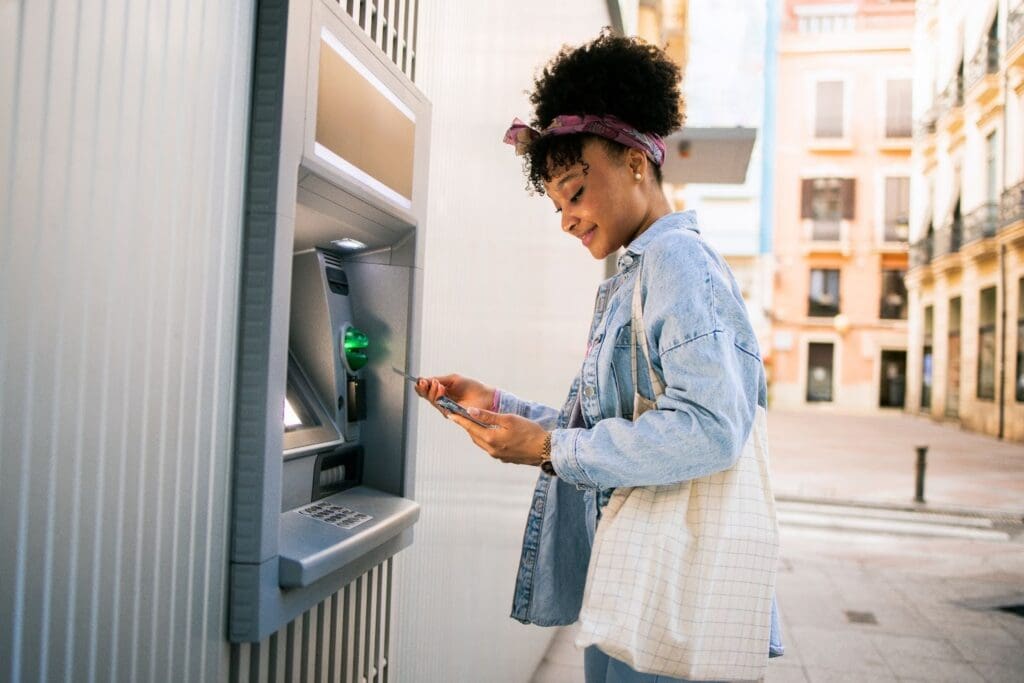
The most visible return in an ATM investment strategy is surcharge revenue. Each transaction generates a fee paid directly by the cardholder, not the business. With consistent foot traffic, those small fees add up quickly.
Cash Depot data consistently shows that even moderate-use ATMs can generate steady monthly income that offsets hardware, processing, and service costs. This steady monthly income is similar to receiving dividends from stocks or REITs, providing a regular passive income stream for investors. In many locations, surcharge revenue alone is enough to cover the ATM’s footprint within the first year of operation, and these funds contribute directly to the business’s overall financial health by supporting ongoing operations and growth.
That’s why the ATM functions as a self-funding asset—it pays for its own presence.
The Multiplier Effect: Dwell Time and Incremental Spend
The real upside, however, goes beyond surcharge income.
When customers withdraw cash on-site, they often don’t leave to find another business. They stay. That additional dwell time directly increases the likelihood of impulse purchases, add-ons, tips, or secondary transactions, creating more sales opportunities and boosting overall profits.
That’s where business floor space ROI becomes measurable.
Turning Square Footage into Passive Revenue
Unlike inventory or promotional displays, an ATM requires no daily sales effort from staff. Once installed and properly serviced, it generates income passively, leveraging your business’s ability to maximize underutilized space for additional revenue.
This makes it one of the few ways to convert underutilized floor space into passive revenue without increasing labor, expanding inventory, or changing core operations, while also optimizing your resources for better financial outcomes.
From an ROI perspective, the ATM footprint competes favorably with vending, promotional shelving, or low-margin merchandise—often outperforming them over time with lower operational risk.
Why ATMs Are Different from Other In-Store Revenue Tools
Many in-store revenue initiatives rely on employee engagement, upselling, or seasonal demand. ATMs operate independently of those variables. As long as customers need cash, transactions continue regardless of staffing levels, promotions, or economic fluctuations.
In a cash-preferred market, this stability is critical. The ATM becomes a consistent financial baseline that smooths revenue volatility and supports cash flow predictability, benefiting both business owners and shareholders by providing a reliable and predictable income stream.
Understanding Local Regulations
Before making an ATM investment, it’s crucial to understand the local building codes and regulations that govern commercial use of automated teller machines. Investors must ensure their ATMs comply with all relevant zoning laws, accessibility standards, and business licensing requirements. Navigating these regulatory factors is essential to avoid fines, delays, or operational disruptions. By thoroughly researching and adhering to local guidelines, investors can minimize risk and set the stage for a smooth, profitable investment experience. Staying proactive about compliance not only protects your investment but also builds credibility and trust within the marketplace.
ATM Investment Strategies
A successful ATM investment hinges on a well-crafted strategy that takes into account key factors such as location, foot traffic, and demographic trends. Investors should prioritize high foot traffic areas—think shopping malls, entertainment venues, or busy commercial corridors—where the demand for cash is consistently strong. For example, placing an ATM in a bustling convenience store can yield higher transaction volumes than a quieter location. It’s also important to consider the potential impact of economic downturns and have contingency plans in place to safeguard your investment. By analyzing market data and remaining flexible, investors can optimize their returns and build a resilient, long-term revenue stream.
The Cost Side of the Equation (And Why It’s Overstated)
Business owners often fixate on ATM costs—hardware, processing, maintenance—without looking at the full return picture. The price of ATM hardware and the potential need for capital to fund the investment are important considerations. Some business owners may use a loan or finance options to acquire an ATM, making it essential to manage debt responsibly to maintain financial flexibility. When analyzed through a proper ATM investment strategy, these costs are fixed, predictable, and typically outweighed by combined surcharge and indirect revenue.
When service providers, sellers, or banks handle monitoring, compliance, and cash logistics, the operational burden on the business remains minimal. That’s what allows the ATM to function as an asset rather than a management headache.
ATM Maintenance and Upkeep
Ensuring your ATM operates smoothly is essential for maximizing revenue and minimizing risk. Regular maintenance—including cleaning, software updates, and timely cash replenishment—helps prevent downtime and keeps customers satisfied. Because ATMs often handle heavy loads of cash, investing in robust security measures and high-quality equipment is a must to deter theft and vandalism. By establishing a consistent maintenance schedule and partnering with reliable service providers, investors can reduce the risk of technical issues and protect their revenue streams, making ATM ownership a hassle-free addition to any commercial property.
Customization Options for ATMs
Modern ATMs offer a range of customization options to meet the specific needs of businesses and investors. Whether you require a machine with higher cash dispensing capacity, a larger screen for enhanced user experience, or advanced security features like biometric authentication, there’s an ATM model to fit your requirements. Customizing your ATM not only creates a competitive advantage but also allows you to offer tailored services that attract more users and increase your market share. By selecting the right features and services, investors can differentiate their offering, better serve their customers, and create additional value in the ATM marketplace.
Measuring True Business Floor Space ROI
The smartest operators evaluate ATMs the same way they evaluate any other income-generating square footage: revenue per square foot over time, while also considering how ATMs can increase a business’s equity over time.
When surcharge income is combined with increased average ticket size and longer customer dwell time, ATMs consistently outperform expectations. In many cases, they generate more net value than merchandise occupying the same space, due to the difference in ROI between ATMs and traditional retail products.
The answer is clear: high-performing locations don’t ask whether they can “fit” an ATM—they ask how soon it can be installed.
The Bottom Line: An ATM is a Revenue Generator
Viewed through the right lens, an ATM is not a cost center, a convenience feature, or a necessary evil. It’s a revenue-generating floor space investment that pays for itself while driving new foot traffic and repeat customers who spend on-site.
A well-executed ATM investment strategy leverages surcharge revenue, cash- demand, and consumer behavior to turn a few square feet into a long-term profit engine.
The question isn’t whether you can afford to place an ATM—it’s whether you can afford to leave that revenue on the table.
Q&A (Questions & Answers)

1. How does an ATM pay for its own physical footprint?
Every square foot of a business is expected to generate value. An ATM achieves this by functioning as a self-funding asset. Through surcharge revenue alone, the surcharge fees paid by cardholders for each transaction, most ATMs can generate enough monthly income within the first year of operation to cover the initial upfront hardware costs.
2. Does having an ATM on-site actually increase customer spending?
Yes. Data shows that access to cash is a major driver of spending behavior, especially in cash-heavy environments like bars or convenience stores. Customers who withdraw cash on-site tend to stay longer (increased dwell time) and are more likely to make impulse purchases or spend more per visit compared to those who do not use the machine.
3. Is investing in ATMs considered a passive income stream?
Yes. Unlike traditional retail inventory that requires constant restocking and sales effort from staff, an ATM operates independently. Once installed and supported by a service provider for maintenance and cash logistics, it generates revenue around the clock with minimal oversight, making it an ideal way to build wealth and diversify an investment portfolio.
4. What are the most important factors for a successful ATM investment?
The most critical factor is location. Successful strategies prioritize high-traffic areas such as shopping malls, entertainment venues, and busy commercial corridors where the demand for cash is consistent. Investors should also focus on compliance with local building codes, accessibility standards, and zoning laws to ensure smooth, uninterrupted operations.
5. Is the maintenance and upkeep of an ATM a significant burden?
When managed correctly, the operational burden is minimal. By partnering with a reliable service provider for monitoring and cash replenishment, the business owner can avoid the headaches of technical issues. Regular software updates and professional maintenance help prevent downtime, ensuring the machine remains a reliable profit center for the business.